Do you need a sewer scope when buying a house? A sewer scope is optional. But it is the only way to see inside the main sewer line before you close. That line runs underground from the house to the city sewer or a septic tank, and most buyers never think about it until a drain backs up.
This guide explains what a sewer scope is, why a regular home inspection can’t see inside the line, and which homes in Greensboro and the Triad benefit from one the most.
What Is a Sewer Scope?
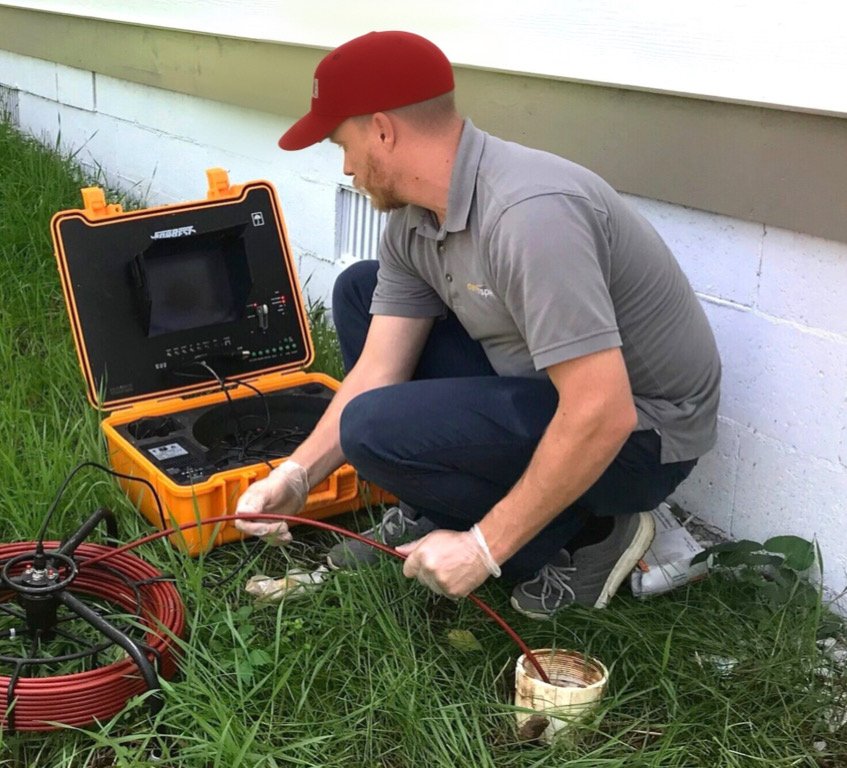
A sewer scope is a camera check of the main sewer line. The inspector feeds a small camera on a long cable into the line through a cleanout. A cleanout is a capped pipe, usually in the yard or near the foundation, that gives access to the line.
As the camera moves through the pipe, the inspector watches a screen and notes what they see. At Home Spectors, the scope is recorded on video, and the video is shared in your digital report along with notes on the pipe material and any defects we observed.
Why a Home Inspection Doesn’t Cover the Sewer Line
A standard home inspection looks at the parts of the house that can be seen and reached. During the plumbing check, the inspector runs water at sinks, tubs and toilets and watches how the drains perform.
That test is useful, but it has limits. The main sewer line is buried in the yard, out of sight. Running water for a few minutes may not show a partial blockage, a crack or a root that is slowly growing into the pipe. A home can drain fine on inspection day and still have a problem waiting underground.
A sewer scope fills that gap. It gives you a look at the one part of the plumbing system that a home inspection can’t reach.
Which Homes Need a Sewer Scope Most
Any buyer can order a sewer scope. These homes are where it tends to matter most:
- Older homes. Many older neighborhoods have clay, cast iron or Orangeburg sewer pipe. These materials can crack, rust or lose their shape as they age.
- Lots with big trees. Tree roots look for water. They can push into small gaps at pipe joints and keep growing until they block the line.
- Homes that sat empty. If a house was vacant for a while, the drains may not have been used enough to show a problem.
- Homes with slow drains or past backups. If the seller’s disclosure mentions backups, or drains run slow during the inspection, a scope can help show why.
Newer homes can have sewer problems too, such as construction debris left in the line or a section that was not laid at the right slope. Age is a good clue, but it is not the only one.
What a Sewer Scope Can Find
Here are the common issues a camera can show inside a sewer line:
- Tree roots growing into the pipe through joints or cracks.
- Cracked or broken pipe that can let water and waste leak into the soil.
- Bellies or sags, which are low spots where the pipe has settled. Water and waste can sit there instead of draining.
- Offsets, where two sections of pipe no longer line up.
- Blockages from grease, debris or other buildup.
Many of these problems give no warning signs from inside the house. That is why a camera inspection can be so helpful before you buy.
What a Sewer Scope Does Not Do
It helps to know the limits up front. A sewer scope is a video inspection. It is not a plumbing diagnosis or a repair estimate.
Home Spectors does not repair or clear sewer lines, so we have no repair work to sell you. Our job is to show you what the camera sees and explain it in plain language. If we find a concern, a licensed plumber is the right person to say what it means for repairs.
A scope also needs an accessible cleanout on the property. If there isn’t one, we will let you know before the inspection.
When to Schedule a Sewer Scope
The best time is during your due diligence period. In North Carolina, that is the window when buyers do their inspections and decide whether to move forward. Scheduling early leaves time to get a plumber’s opinion and talk things over with your agent.
The easiest way to do it is to add the sewer scope to your home inspection. That way it all happens in one visit, and you don’t have to set up another appointment. Our reports are usually ready the same day, and within 24 hours, which helps when the clock is running.
What Happens If the Scope Finds a Problem
Finding a problem does not mean you have to walk away from the house. It means you have information while you still have options.
Here is a simple plan:
- Read the report and watch the video with your agent.
- Share the video with a licensed plumber and ask what they recommend.
- Talk with your agent about next steps. That might mean asking the seller to make a repair, asking for a credit, or deciding the home is not the right fit.
Because the scope is recorded, everyone can look at the same footage. That keeps the conversation clear and based on what is actually in the pipe.
Questions Buyers Often Ask
Can a sewer scope be done with the home inspection?
Yes. You can add it to your home inspection so both happen in the same visit. It is also available as a standalone service.
Will I get to see the video?
Yes. The video is shared in your digital report, along with notes on what the inspector observed.
Is a sewer scope worth it on a newer home?
It can be. Newer lines are less likely to have root or age problems, but debris and settling can still happen. If you have any doubts, a scope gives you a clear answer.
About Home Spectors
Home Spectors is a family-owned inspection company that has served buyers and sellers since 2007. Our team has completed more than 40,000 inspections, and our inspectors are in-house, not subcontracted. Jason Michael is a Certified Master Inspector, NC license #2855. Home inspections come with a free 90-day warranty through Home Warranty Inc., effective at closing.
Learn more about our sewer scope inspection in Greensboro and the Triad.
Add a Sewer Scope to Your Inspection
Buying a home in Greensboro or the Triad? Schedule your home inspection online and add a sewer scope, or call us at (336) 382-7269.